Source EPA Certified UV Birch Plywood for Furniture, Cabinetry, and Flooring
Compare 30 listings for EPA certified UV birch plywood, featuring options in poplar and birch cores with thicknesses from 4mm to 24mm. Evaluate specifications like formaldehyde emission grades, bonding strength, and surface treatments to find the right material for your indoor or outdoor projects.
Key considerations
Products List




Comprehensive Sourcing Guide
EPA Certified UV Birch Plywood Sourcing Guide
Procuring UV birch plywood requires a nuanced understanding of how surface treatments interact with core materials to deliver both aesthetic appeal and structural integrity. The term "UV birch plywood" typically refers to panels where a birch veneer face is treated with ultraviolet-cured coatings, enhancing durability and visual consistency. Buyers must distinguish between solid birch veneers and composite cores, as the latter often use poplar or MDF for cost efficiency while maintaining a premium birch appearance. This distinction directly impacts performance in high-traffic environments, where surface resistance to scratches and moisture is critical.
The "EPA certified" designation often confuses buyers, as the U.S. Environmental Protection Agency does not directly certify individual plywood products. Instead, compliance usually relates to formaldehyde emission standards, such as CARB Phase 2 or TSCA Title VI, which align with EPA guidelines for indoor air quality. Sourcing guides must clarify that certifications like CE or ISO indicate manufacturing quality and environmental management systems rather than direct EPA product approval. Understanding this regulatory landscape prevents miscommunication with suppliers and ensures that the purchased materials meet the specific legal requirements of the destination market, particularly in regions with strict indoor air quality laws.
Product Scope and Observed Listing Signals
Market listings for UV birch plywood reveal a wide variance in specifications, with observed prices ranging from $2 to $41.4 per unit, reflecting differences in veneer thickness, core composition, and surface treatment quality. Minimum order quantities (MOQs) typically span from 1 to 1000 units, allowing flexibility for both small-scale custom projects and large commercial builds. Buyers should note that "UV Coated" surfaces are frequently paired with "Straight Grain" or "Irregular Grain" patterns, offering distinct aesthetic options. The presence of "Customized" attributes indicates that suppliers can tailor dimensions and finishes, but this often extends lead times and increases unit costs.
Observed product attributes highlight specific construction details, such as 7-ply, 9-ply, and 13-ply configurations, which influence stiffness and load-bearing capacity. Specifications like 1220*2440mm sheets in thicknesses ranging from 4mm to 24mm are common, with 15mm and 18mm being popular for furniture and cabinetry. The use of "Phenolic WBP" or "E0/E1" glues suggests varying levels of water resistance and formaldehyde emission, respectively. Buyers must verify these details against their project needs, as "Indoor/Outdoor" usage claims require robust waterproof adhesives and specific veneer treatments to prevent delamination in humid conditions.
Technical Specifications to Verify
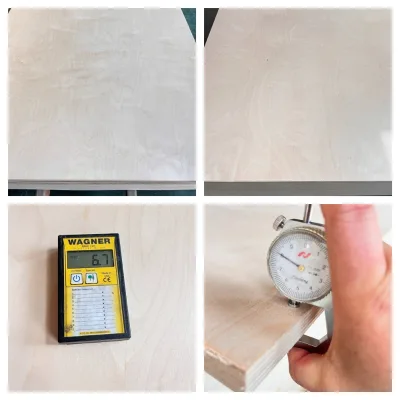
Verifying the core material is paramount, as listings may specify "Birch" veneer over "Poplar" or "MDF" cores. The density range of 680-720 kg/m³ is typical for birch-based panels, ensuring structural stability, while moisture content should be controlled between 5%-14% to prevent warping during installation. Buyers should confirm the face and back veneer grades, such as B/Bb or S/Bb, which determine the visual quality and smoothness of the final surface. The "Two Times Hot Press" process mentioned in some listings indicates enhanced bonding strength, reducing the risk of layer separation under stress or temperature fluctuations.
Surface treatment specifications, including "UV Coated," "Honed," or "Embossed" finishes, significantly affect maintenance and longevity. The bonding strength classifications, such as I(NQF), II(Ns), or III(Nc), provide insight into the panel's resistance to moisture and heat, with higher classifications suitable for more demanding environments. Buyers must also check the glue type, as "Mr" or "Carb P2" adhesives offer different performance profiles regarding water resistance and environmental impact. Ensuring that the "Standard Export Package" or "Wooden Pallet" packaging is adequate prevents damage during transit, which is critical for maintaining the pristine condition of UV-coated surfaces.
Compliance and Safety Documentation
Formaldehyde emission standards are a primary concern for indoor applications, with "EGrade: Grade One" and "Excellent Grade" labels indicating low emission levels. Buyers should request test reports that align with recognized standards, such as EN 717 or ASTM D6007, to verify that the product meets local regulatory requirements for indoor air quality. While "CE" and "ISO" certifications are listed, they primarily attest to manufacturing process compliance rather than specific emission limits. It is crucial to distinguish between general quality certifications and specific environmental compliance documents to avoid legal liabilities in regulated markets.
Environmental standards, such as those referencing "ESurface Treatment," often relate to the safety of the UV curing process and the absence of volatile organic compounds (VOCs) in the final product. Buyers should inquire about the specific glue formulations used, as "E0" and "E1" grades represent different thresholds for formaldehyde release. Documentation should also cover the origin of the birch veneer, ensuring it is sourced from sustainably managed forests if sustainability is a project goal. Clear communication with suppliers regarding these documents ensures that the delivered materials meet both safety expectations and regulatory mandates, protecting end-users and project stakeholders.
Cost Drivers and Commercial Terms
The price of UV birch plywood is influenced by the thickness, veneer grade, and the complexity of the surface treatment. Thicker panels, such as 18mm or 24mm, command higher prices due to increased material usage and processing time. Custom sizes and non-standard ply counts, like 13-ply configurations, also add to the cost, as they require specialized manufacturing setups. Buyers should anticipate that "Custom Made" orders will incur additional charges for setup and potential material waste, which should be factored into the overall budget. Understanding these variables helps in negotiating more accurate quotes and avoiding unexpected cost overruns.
Commercial terms, including MOQs and packaging requirements, play a significant role in the total cost of ownership. Lower MOQs may result in higher per-unit prices, while bulk orders can leverage economies of scale. The choice between "Standard Export Package" and "Plywood Pellet" packaging affects shipping efficiency and protection, with palletized options often being more cost-effective for large volumes. Buyers should also consider lead times, as custom specifications and certification processing can extend delivery schedules. Clear agreement on these terms ensures that the procurement process remains transparent and aligned with project timelines and budget constraints.
Supplier Qualification and Quality Control
Supplier qualification begins with verifying their ability to produce consistent UV-coated surfaces and maintain tight tolerances on panel dimensions. Buyers should request samples to assess the quality of the birch veneer, the adhesion of the UV coating, and the overall finish smoothness. Inquiring about the supplier's quality control processes, including moisture content monitoring and bonding strength tests, provides insight into their manufacturing reliability. Suppliers who offer "Customized" solutions should demonstrate a robust engineering team capable of handling complex specifications without compromising structural integrity.
Quality control extends to the verification of raw materials, ensuring that the birch veneer and core materials meet specified density and moisture standards. Buyers should ask for batch-specific test reports for formaldehyde emissions and bonding strength to ensure consistency across orders. The use of "Phenolic WBP" glue should be confirmed through documentation, as this adhesive is critical for water-resistant applications. Establishing a clear communication channel for addressing defects or discrepancies is essential, as it allows for timely resolution and maintains the integrity of the supply chain. Regular audits or third-party inspections may be warranted for large-scale procurement projects.
Long-Term Procurement Checks
Long-term procurement success depends on establishing a reliable supply chain that can adapt to changing project requirements and market conditions. Buyers should monitor supplier performance metrics, such as on-time delivery rates and defect frequencies, to identify potential issues early. Maintaining open dialogue with suppliers regarding new product developments, such as improved UV coatings or sustainable core materials, can provide competitive advantages. Regularly reviewing compliance documentation ensures that the supplier remains up-to-date with evolving environmental regulations and industry standards, reducing the risk of non-compliance in future orders.
Building a diversified supplier base can mitigate risks associated with single-source dependencies, especially for critical materials like UV birch plywood. Buyers should periodically reassess their supplier portfolio to ensure that quality, cost, and service levels remain optimal. Engaging in long-term contracts with trusted suppliers can secure favorable pricing and priority production slots, enhancing supply chain stability. Additionally, staying informed about industry trends, such as advancements in formaldehyde-free adhesives or eco-friendly veneer treatments, allows buyers to make proactive decisions that align with sustainability goals and market demands.
FAQs
What certifications does the UV birch plywood have?
The product holds CE and ISO certifications for quality assurance. It also meets E0 and E1 formaldehyde emission standards to ensure safety. These certifications confirm the material is suitable for both indoor and outdoor applications while maintaining high environmental compliance.
Can I get custom sizes for this plywood?
Yes, custom sizes are available upon request to meet specific project needs. The standard dimensions are 1220 by 2440 millimeters, but manufacturers can produce other sizes. This flexibility allows buyers to tailor the product exactly to their construction or design requirements.
What is the bonding strength of this plywood?
The bonding strength is classified as Grade I or Class III depending on the specific product variant. This ensures durability and resistance to moisture. The core material is birch, which contributes to the overall structural integrity and long-term performance of the finished panels.
How is the surface treated on this UV plywood?
The surface undergoes a UV coating process to enhance durability and appearance. Some variants feature embossed or honed finishes for specific aesthetic effects. This treatment protects the wood while providing a smooth, consistent look suitable for various interior and exterior design applications.
What is the moisture content range for this material?
The moisture content ranges from 5 percent to 14 percent for optimal stability. This range helps prevent warping and ensures the wood remains dimensionally stable in different environments. Proper moisture control is critical for maintaining the quality of the birch veneer and core layers.
Which glue types are used in manufacturing this plywood?
Manufacturers use Phenolic WBP, E0, and E1 glues for bonding the layers. Some products may also utilize Carb P2 glue for specific performance needs. These adhesives ensure strong bonding strength while meeting strict environmental standards for formaldehyde emissions in the final product.
What is the density of the UV birch plywood?
The density typically falls between 680 and 720 kilograms per cubic meter. This density range indicates a solid and robust core structure suitable for demanding applications. The consistent density ensures uniform performance across different thicknesses and ply configurations offered by the suppliers.